

Brace Port Logistics Limited is a tech-driven, asset-light logistics platform providing end-to-end, multimodal solutions across air and ocean freight, warehousing, customs clearance, project cargo, and inland transport. Leveraging digital tracking, paperless processes, and real-time visibility, the company delivers sector-focused logistics solutions while maintaining a scalable and margin-accretive business model.
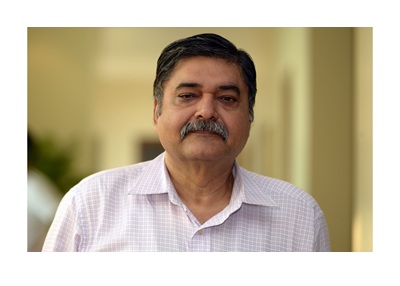
Sachin Arora, Managing Director of Brace Port Logistics Limited, has over 22 years of experience in the logistics industry. He holds a B.A. degree from the University of Delhi and has previously worked with Blue Moon Express Pvt Ltd, Allcargo Global Logistics, and HTL Logistics India.
Q1. Braceport has grown rapidly since inception. How would you describe the company’s core identity and differentiation today?
At Braceport, our core identity is built around strong execution, technology-led processes, and an asset-light model that keeps us agile. We manage end-to-end logistics across air, ocean, road, warehousing, and customs, with a focus on reliability and speed.
Combined with our digital workflows and compliance-driven approach, we are able to offer seamless, transparent logistics solutions while scaling efficiently across markets.
Q2. Global freight rates were under pressure in H1 FY26. How did Braceport navigate these market conditions?
H1 FY26 was a challenging period for the logistics industry, with geopolitical events and softer freight rates impacting global trade flows. Even in this environment, we maintained strong operational momentum. We executed several complex international movements—including electric buses from India, car consignments from Malaysia, and Mitsubishi Fuso trucks from Japan—reinforcing the trust our clients place in our capabilities.
Q3. Your margins improved in H1 FY26. What enabled this resilience?
Our margin profile improved primarily due to a sharper focus on gross margin optimisation, which increased from 12.93% to 17.56% year-on-year, and a higher contribution from complex, high-value cargo, particularly in automotive and EV logistics. The strength of our asset-light model, combined with strong carrier relationships and process-driven efficiencies, continues to support margin stability even in a softer freight environment.
Q4. Automotive and EV logistics seem to be emerging as strong verticals. How do you see this opportunity?
Automotive logistics is becoming a major growth engine for us. EV OEMs and global auto manufacturers expect precision, consistency, and compliance—and our execution strengths align perfectly with those needs.
The electric bus shipments and cross-border car movements we handled recently are excellent examples of this capability in action. With increasing activity across ASEAN, GCC, and Africa, and the rise of EV mobility, we see multi-year opportunities in this segment.
Q5. You recently onboarded clients like Continental Tires and Ashbee Systems. What does this mean for Braceport?
Bringing in marquee international clients validates our global competitiveness. Continental and Ashbee Systems strengthen our footprint in the automotive and industrial verticals.
Such clients typically offer long-term recurring business, higher compliance requirements, and more strategic engagements—all of which play to our strengths in process discipline, documentation, and tech-enabled visibility.
Q6. What is the strategic thinking behind your international expansion, especially the UAE subsidiary and the newly incorporated company in Canada?
Our international strategy is focused on establishing a presence in high-potential trade corridors where our customers operate. The UAE subsidiary is already operational and gives us strong access to GCC and African markets. In Canada, we have incorporated an associate company as a strategic first step toward building our presence in North America, it positions us well to participate in future opportunities across that region. These initiatives strengthen our global footprint and move us closer to becoming a truly international multimodal logistics partner.
Q7. Beyond geography, which sectors will drive Braceport’s next phase of growth?
We see strong growth potential in automotive and EV mobility, healthcare logistics, engineering and industrial cargo, as well as renewables and project logistics. These sectors demand high compliance, reliability, and technology-led execution, which aligns well with our existing capabilities and operating strengths. By deepening our presence in these verticals, we are positioning Braceport to participate in long-term, high-quality demand across both domestic and international markets.
Q8. Could you explain how your asset-light model supports scalability?
Our model does not depend on owning fleets or heavy infrastructure; instead, we operate through a strong ecosystem of trusted partners across air, ocean, warehousing, and road transport. This gives us the ability to expand into new markets quickly, stay highly capital-efficient, and offer multimodal solutions without the capex burden that traditional logistics players carry. It also helps protect our margins during softer cycles. Overall, this asset-light approach gives us a scalable, disciplined growth platform that can adapt to market conditions while continuing to deliver value.
Q9. How is technology strengthening Braceport’s operating model and helping you deliver a superior logistics experience?
Technology is embedded into every step of our operations—real-time tracking, paperless documentation, automated workflows, and client reporting.
Our in-house systems and the tech stack of SGATE Technologies, a Skyways Group company, enable complete visibility and compliance. In logistics, speed and transparency differentiate winners from the rest, and our digital backbone is a key competitive advantage.
Q10. How do you view risks such as freight rate volatility and geopolitical uncertainties?
These risks are part of the global logistics environment, but our business model is inherently designed to manage them. We operate across multiple geographies, industry segments, and service lines, which helps us offset volatility in any one market. Our strong client relationships ensure stable, recurring volumes, and our asset-light structure keeps our fixed-cost exposure low. As a result, even when geopolitical or macroeconomic conditions are unpredictable, our diversified operations provide a solid degree of resilience and continuity.
Q11. What are the key priorities you are focusing on for the next 12–18 months?
Over the next 12–18 months, our focus is on strengthening both our domestic and international footprint. We are expanding our presence in key Indian markets such as Ahmedabad, Bengaluru, Pune, and Hyderabad, while also deepening our capabilities across GCC, Africa, and North American trade corridors. On the sector side, we see strong momentum in automotive and EV logistics, and we intend to scale this vertical further. At the same time, we are investing in digital automation and paperless workflows to drive efficiency and enhance customer experience. Across all initiatives, our aim is to build deeper sector expertise, strengthen long-term client relationships, and create a more sustainable, profitable growth platform for the company.
Q12. What is the long-term vision you are working toward for Braceport?
We are building a modern logistics organisation—digitally enabled, globally connected, and operationally disciplined. Our ambition is to become a trusted multimodal logistics partner for global and domestic clients, while maintaining our capital-efficient, asset-light structure. With the momentum we have created in H1 FY26 and the opportunities ahead in automotive, renewables, and international logistics, we are confident that Braceport is on the right path for long-term value creation.




Leave a Reply