
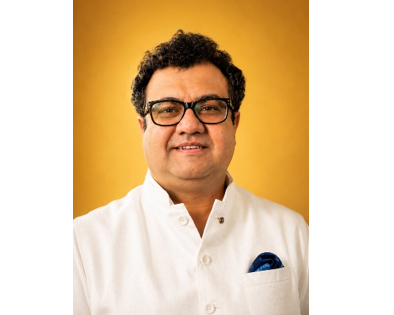
Cash Ur Drive Marketing Limited, headquartered in Noida with a presence across 25+ cities, is a mobility-led media infrastructure company enabling brands to reach high-frequency urban audiences through scalable, asset-light advertising solutions. Its diversified portfolio spans cabs, buses, EV charging stations, and digital outdoor media. Listed on NSE Emerge in August 2025, the Company reported FY26 Total Income of ₹192.38 crore, EBITDA of ₹39.29 crore, and Net Profit of ₹29.40 crore.
Q1. Cash Ur Drive has built long-standing partnerships across the transit media ecosystem, including its foray into EV buses. In such a fragmented OOH market, what prevents newer or hyper-local players from replicating your asset-light transit media model?
Response: At first glance, transit media may appear easy to replicate, but the real differentiator lies in the ecosystem built around it. Our partnership with Olectra is a good example of this. It reflects the trust and execution capabilities we have built over the last 17 years, enabling us to expand into emerging transit media formats such as electric buses.
Over the years, we have invested in long-term partnerships, operational capabilities, technology, compliance and execution at scale. Today, we have delivered over 5,000 campaigns for more than 2,000 brands across 25+ cities, which reflects the trust we’ve built over time.
Executing campaigns across large transit networks requires route intelligence, quality control, monitoring systems and nationwide execution capabilities. These are not advantages that can be created overnight.
We don’t see ourselves merely as an advertising company. We are building mobility-linked media infrastructure, and strategic initiatives such as our Olectra partnership further strengthen our competitive moat beyond simply owning advertising inventory.
Q2. The Company has strategically expanded into new-age infrastructure with EV charging stations, public bicycle shelters and Digital OOH screens. How do these assets compare with traditional transit media in terms of advertising yields, utilization and pricing power?
Response: Traditional transit media continues to remain a strong and scalable business because it offers unmatched reach and frequency. However, infrastructure-led media assets such as EV charging stations, digital screens and public bicycle shelters create a different value proposition.
These assets generally offer longer dwell times, premium environments and better opportunities for contextual communication. As advertisers increasingly seek measurable, high-quality consumer engagement rather than only impressions, these formats naturally command stronger pricing power.
Our strategy is not about replacing transit media but creating an integrated media ecosystem where moving and stationary assets complement each other. This enables brands to engage consumers throughout their daily journeys while improving inventory utilization and long-term monetization.”
Q3. Your recent investments in Kolkata Call Taxi, Charj Karo Greentech Mobility and the 10-year EV charging concession in Rishikesh indicate a broader urban mobility strategy. How do these initiatives strengthen recurring revenues, and can this model be replicated across other cities?
Response: Urban mobility is evolving rapidly, and we believe the future of media will increasingly be linked with mobility infrastructure. Our recent investments are aligned with that long-term vision.
Instead of simply adding more advertising locations, we are building access to assets that generate recurring opportunities over extended concession periods. EV charging infrastructure, mobility platforms and public infrastructure create multiple monetization avenues while strengthening long-term relationships with ecosystem partners.
The model is highly scalable because India’s urban infrastructure is expanding rapidly through electric mobility, smart city initiatives and public transport modernization. We see significant opportunities to replicate this integrated approach across multiple cities over the coming years.
Q4. Standalone EBITDA margins expanded by 420 basis points to 18.41% in H2 FY26. What are the key structural drivers behind this improvement, and do you expect margins at this level to remain sustainable?
Response: The margin improvement is the outcome of structural changes rather than one-off factors. Over the past few years, we have consciously shifted our portfolio towards higher-value proprietary inventory, improved campaign execution efficiency and strengthened operational leverage across our network.
Technology has also played an important role in planning, monitoring and resource optimization, enabling us to execute campaigns more efficiently at scale.
While quarterly margins may naturally fluctuate depending on media mix and campaign cycles, we remain focused on building a business with stronger operating leverage, a higher share of proprietary assets and disciplined cost management. These structural drivers give us confidence in our long-term profitability.
Q5. While revenue and profitability have grown strongly, working capital days have also increased. What measures are being taken to improve collections and strengthen cash flow conversion?
Response: As businesses scale, working capital management naturally becomes an important area of focus. We continue to strengthen our internal processes around collections, client credit evaluation and payment discipline.
Our emphasis is on improving the quality of revenue rather than simply accelerating topline growth. We are also increasing our engagement with large enterprise clients, government bodies and institutional customers where relationships are long-term and payment visibility is stronger.
At the same time, we are leveraging technology to improve billing cycles, reconciliation and financial controls, ensuring healthier cash flow conversion over the long term.
Q6. As the OOH industry becomes more organized, advertisers are increasingly seeking measurable reach and regulatory compliance. How has your NSE listing enhanced your credibility while competing for large corporate mandates, and what differentiates Cash Ur Drive from unorganized players?
Response: Listing on the NSE is more than a financial milestone—it is an important trust milestone.
Today, large advertisers, multinational companies and government organisations increasingly prefer working with partners that demonstrate transparency, governance and financial discipline. Being a listed company reinforces our commitment to these principles.
What differentiates us is our ability to combine proprietary media assets, nationwide execution, technology-driven reporting and long-term infrastructure partnerships within one integrated platform. As the industry becomes more organised, we believe these capabilities will become increasingly valuable for advertisers’ seeking accountability, consistency and measurable outcomes.
Q7. A significant part of your transit media network is built around mobility aggregators and public transport operators. How do you safeguard these partnerships and protect your business from changes in commercial terms or operating models?
Response: Our philosophy has always been to build partnerships rather than vendor relationships.
Over the years, we have worked closely with mobility operators by creating solutions that generate value for every stakeholder involved. Because we understand both the advertising ecosystem and the mobility ecosystem, our relationships extend beyond commercial agreements.
Equally important, we continue to diversify our media portfolio across transit, EV infrastructure, Digital OOH and public assets. This diversification strengthens business resilience while reducing dependence on any single format or partner.
Q8. With operations spanning more than 25 cities, how does Cash Ur Drive ensure consistent execution and service quality across such a large and diverse transit media network?
Response: Delivering consistent execution at scale has always been one of our key strengths. Managing campaigns across multiple cities requires strong coordination, standardized processes and real-time monitoring to ensure every campaign is executed as planned.
We have built experienced regional teams with deep local market knowledge while maintaining standardized operating processes across all markets. This combination of local expertise and centralized governance enables us to deliver campaigns efficiently and consistently, regardless of geography.
As the industry matures, companies with strong execution capabilities, operational discipline and nationwide reach will naturally enjoy a competitive advantage.
Q9. What is the management’s long-term strategy for enhancing shareholder value? Should investors expect strategic acquisitions, monetization of investments or other initiatives to unlock value in the coming years?
Response: Our objective is to build long-term shareholder value through sustainable business expansion rather than short-term financial engineering.
Going forward, our priorities include expanding our proprietary media portfolio, strengthening our presence in the EV and mobility ecosystem, increasing the contribution of higher-margin exclusive assets and investing in technology that enhances planning, measurement and campaign effectiveness.
We will continue evaluating strategic opportunities that complement our core business and strengthen our market position. Any acquisition or investment will be guided by long-term strategic fit, capital discipline and the ability to create enduring value for our shareholders.
We believe the next phase of growth in outdoor advertising will be driven by companies that combine infrastructure ownership, technology, mobility and governance. That is precisely the direction in which we are building CASHurDRIVE. “Listing on the NSE was not the finish line—it was a statement of intent. For us, it validates years of building trust and gives us the platform to think bigger, invest deeper and create lasting value for our shareholders, clients and the industry.”


Leave a Reply