
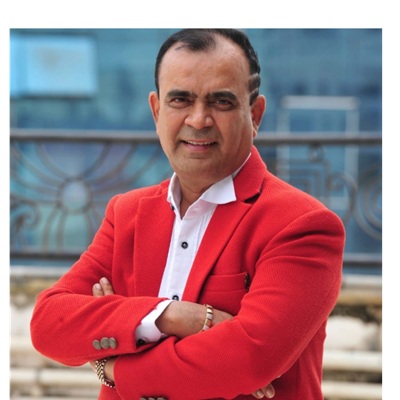
Dr. Yogesh Lakhani’s journey is a story of resilience, perseverance, and the power of dreams.
Born into a modest middle-class family in Mumbai and raised in a 10×10-foot home in Malad, he faced financial hardships from an early age. While still in school, he sold newspapers and other small items to support his family. His career in advertising began as a delivery boy in a cinema advertising business. Through hard work, determination, and self-belief, he laid the foundation for Bright Outdoor Media. Starting with modest assignments and a small office, Dr. Lakhani steadily expanded the business across multiple advertising formats. His customer-centric approach and unwavering commitment to excellence helped establish Bright Outdoor Media as a trusted name in the industry.
Today, the Company is a leading player in India’s advertising landscape, executing campaigns for leading corporates, entertainment productions, major events, public initiatives, and political campaigns. Under his leadership, Bright Outdoor Media expanded across key markets, strengthened its media asset portfolio, became India’s first listed Out-of-Home advertising company, and earned a Guinness World Records recognition for installing the largest number of solar panels on a single billboard in Mumbai.
Q1: For someone looking at Bright Outdoor for the very first time, could you just walk us through the basics? What are your main revenue streams, and how exactly does the company make its money today?
Answer: I look at it this way, at its core, Bright Outdoor operates in one of the oldest yet fastest-evolving segments of media and advertising the Out-of-Home (OOH) industry. Every day, millions of consumers travel through roads, highways, transit hubs, business districts, and urban centres, and brands are constantly competing for visibility in these high-attention environments. Bright Outdoor positions itself as the bridge between brands seeking large-scale public visibility and audiences moving through these high-footfall locations.
Over the years, the company has built a diversified media network across traditional billboards, digital LED screens, transit advertising, railway & metro media along with other large-format branding solutions. In addition to media ownership and inventory management, the company has also expanded into integrated campaign execution and experiential branding, allowing advertisers to run more immersive and high-impact campaigns across multiple formats and cities.
Bright Outdoor makes money by owning, operating, and monetising premium outdoor advertising inventory — and increasingly by combining traditional OOH, digital screens, transit media, and experiential branding into integrated visibility solutions for brands.
Q2: How important it is to get a business directly from brands versus going through ad agencies? What is the actual revenue split between the two right now, and which side gives you better profit margins?
Answer: From Bright Outdoor Media’s perspective, both direct brand clients and agency business are important, but direct client relationships hold significant strategic value for long-term growth.
Direct brand business allows us to engage closely with decision-makers, understand their objectives firsthand, and create customized outdoor advertising solutions. It often leads to stronger client retention, faster decision-making, better control over campaign execution, and opportunities for cross-selling across our network. Direct relationships also help us position Bright Outdoor Media as a marketing partner rather than just a media vendor.
At the same time, advertising agencies remain a critical part of the ecosystem. Many large national and multinational brands prefer to route their media planning and buying through agencies, which provide scale, continuity, and access to multiple brands under one roof. Agency partnerships therefore continue to be an important contributor to our business.
In terms of revenue contribution, while the exact mix may vary year to year, Bright Outdoor Media has been steadily increasing its share of direct client business, which today contributes a substantial portion of our revenues alongside agency-led campaigns. Our focus remains on further strengthening direct brand relationships without compromising our strong agency network.
From a profitability standpoint, direct business generally offers better margins because it eliminates intermediary layers, allows greater flexibility in packaging solutions, and enables deeper value-added offerings. However, agency business often delivers larger volumes and repeat opportunities, which are equally important for maintaining scale and market presence.
Q3: Your real estate arm buys and manages properties. How much of the company’s capital is actually tied up in real estate versus the core billboard business? Also, what kind of returns (ROCE) are you seeing on those property investments?
Answer: Our real estate activities are primarily strategic and complementary to our core Outdoor Advertising business rather than a standalone investment vertical.
When evaluating property investments, our approach is not solely based on short-term ROCE metrics. We assess these assets on multiple parameters, including capital appreciation potential, recurring income opportunities, strategic location advantages, and their ability to support future business growth. Consequently, returns may vary depending on the nature and holding period of each asset.
Overall, our focus remains on generating shareholder value through the growth of our core outdoor advertising business, while maintaining a prudent and selective approach to real estate investments that can contribute to long-term value creation.
Q4: The outdoor media space seems incredibly crowded and fragmented. What honestly stops a competitor from coming in and putting up a massive billboard right next to yours? What keeps your best locations safe?
Answer: While the Outdoor Advertising industry may appear fragmented from the outside, premium locations are actually extremely difficult to replicate. The biggest barrier to entry is not the billboard structure itself—it’s securing the rights, permissions, relationships, and long-term access to high-visibility locations.
Many of our prime sites are backed by long-term contracts, government permissions, railway advertising rights, private property agreements, and strategic partnerships that have been built over several years. These arrangements create a significant competitive advantage and cannot be replicated overnight.
In metropolitan markets such as Mumbai, the availability of premium roadside inventory is limited. Regulatory approvals, zoning restrictions, traffic visibility considerations, and municipal guidelines further restrict the creation of new advertising sites. As a result, even if a competitor wishes to install a billboard near an existing location, obtaining the necessary approvals and securing an equally effective site can be challenging.
What truly protects our best locations is a combination of exclusive rights, long-standing relationships with property owners and authorities, execution capability, and our track record of maintaining high-quality media assets. Over the years, we have invested considerable effort in building a network of premium locations that deliver consistent value to advertisers.
Therefore, the competitive advantage in Outdoor Advertising is not merely about owning a structure; it is about controlling high-demand locations, maintaining regulatory compliance, and building a trusted platform that brands can rely upon. These factors create meaningful barriers to entry and help safeguard our premium inventory.”
Q5: Your company owns exclusive advertising rights for major transit spots like the Navi Mumbai Metro and the Mumbai Port Trust Freeway. How long do these exclusive contracts last, when do they come up for renewal, and how much do the rental costs go up each year?
Answer: Our advertising rights across transit and infrastructure assets such as metro systems, railway networks, highways, and other public infrastructure are governed by individual concession agreements and licensing contracts. The tenure, renewal provisions, and commercial terms vary from project to project depending on the tender conditions and the policies of the respective authorities.
As a matter of policy and contractual confidentiality, we generally do not disclose asset-specific contract durations, renewal timelines, or detailed commercial terms in the public domain. However, these agreements are typically structured with defined tenures that provide sufficient visibility to develop the media infrastructure, attract advertisers, and generate sustainable returns.
Most contracts also contain predetermined escalation clauses, which may be annual or periodic in nature, and are incorporated into our financial planning and pricing strategies. The escalation mechanisms differ across authorities and projects and are established at the time of contract award.
Importantly, our strategy is not dependent on any single advertising asset. We continue to diversify our portfolio across multiple transit, roadside, railway, and premium urban locations, which helps reduce concentration risk and provides stability to our overall business. We also actively participate in new tenders and renewal opportunities as part of our long-term growth strategy.
Q6: We all know traditional TV and print ads are struggling. How is this big shift toward digital outdoor advertising changing the way you run your day-to-day operations?
Answer; The shift towards digital outdoor advertising has fundamentally transformed the way we operate. Earlier, outdoor advertising was largely about securing premium locations and executing static campaigns. Today, Digital Out-of-Home (DOOH) is making the medium more dynamic, measurable, and responsive.
From a day-to-day operations perspective, we now focus much more on technology integration, content management, real-time campaign monitoring, data analytics, and audience measurement. Advertisers increasingly expect flexibility to change creatives instantly, run multiple messages throughout the day, and target audiences more effectively. This requires robust digital infrastructure and dedicated teams to manage and optimize campaigns continuously.
At the same time, digital screens allow us to offer advertisers greater creativity, better engagement, and faster campaign deployment. While traditional billboards remain highly relevant, especially for brand building, the growth of DOOH is enabling us to combine the impact of outdoor media with the agility of digital advertising. The future of our industry lies in this integration of location, technology, and data driven communication.
Q7: Industry reports say the Indian outdoor ad market is going to shoot up from ₹59 billion to ₹79 billion by 2027. Out of that pie, what kind of market share is Bright Outdoor realistically targeting?
Answer: The industry is poised for significant growth, and we see that as a tremendous opportunity. Rather than setting a public target for market share, our priority is to consistently outperform the market through strategic asset acquisition, digital transformation, and deeper client partnerships. If we continue to execute well, we are confident that Bright Outdoor will strengthen its position as one of the leading players in India’s evolving OOH landscape.
Q8: New metro lines, airports, and highways are opening up a lot of new advertising space. But are the lease rentals for these modern transit hubs much more expensive than traditional roadside billboards? Do they end up hurting your margins?
Answer: While lease rentals at metros, airports, and other modern transit hubs are generally higher than traditional billboard locations, they also offer premium audiences, stronger engagement, and greater advertiser interest. The focus is not simply on the cost of the asset, but on its ability to generate sustainable revenues and long-term value. With careful selection and disciplined execution, these assets can enhance both growth and profitability.
Q9: Could you explain how a digital LED billboard actually works from a business perspective? Why is the company moving so aggressively away from traditional, static hoardings?
Answer: A digital LED billboard fundamentally changes the economics of outdoor advertising. With a traditional static hoarding, a single advertiser typically occupies the site for a fixed period. In contrast, a digital screen allows multiple advertisers to share the same asset through scheduled time slots, enabling significantly higher utilization and greater revenue potential from a single location.
From a business perspective, digital inventory offers far more flexibility. Campaigns can be launched quickly, creatives can be updated remotely in real time, and advertisers can tailor messaging based on time of day, audience movement, weather conditions, or special events. This level of agility is increasingly aligned with how modern brands plan and execute their marketing campaigns.
That said, we do not view digital and traditional outdoor media as competing formats. Static hoardings continue to be extremely effective for long-term brand visibility and large-format impact. Our strategy is to build a balanced portfolio that combines the enduring strength of premium static assets with the flexibility and scalability of digital platforms.
The industry’s movement towards digital is being driven by evolving advertiser expectations, advances in technology, and the growing demand for measurable and dynamic communication. As a forward-looking company, we believe it is important to participate in that evolution while continuing to leverage the strengths of traditional outdoor advertising.
Q10: In theory, a digital billboard can make 6 times more money because you can rotate 6 different clients a minute. But what does the actual occupancy look like? Are you able to fill those slots during off-peak hours, like late at night or early in the morning?
Answer: That’s a very mature concept and one that is evolving globally, but in India, Digital Out-of-Home is still largely sold as a full-day medium rather than on a time-slot basis. Most advertisers today buy overall screen presence and share of voice across the day, rather than specifically targeting peak or off-peak hours.
As a result, the discussion is less about filling late-night slots and more about maximizing the value of the entire screen inventory. The real advantage of digital is that multiple advertisers can share the same premium location, making the asset more efficient and commercially attractive than a traditional static billboard.
Over time, as audience measurement and programmatic capabilities improve, we may see more daypart-based advertising. But for now, the Indian market largely values all-day visibility and reach.
Q11: Digital screens obviously use a lot more electricity and need regular maintenance compared to a regular printed billboard. When you convert a traditional hoarding to a digital one, how much do your operating expenses go up?
Answer: A digital screen does involve higher operating costs compared to a traditional static billboard, primarily due to power consumption, technology infrastructure, and ongoing maintenance. However, it is important to view the investment in the context of the revenue-generating potential of the asset rather than simply the increase in operating expenses.
The objective is not to replace a low-cost static structure with a high-cost digital one; the objective is to transform a single-advertiser asset into a platform that can serve multiple advertisers with greater flexibility and efficiency. When deployed at the right locations, the additional operating costs are more than offset by the enhanced commercial opportunities that digital screens create.
Ultimately, success in digital OOH depends on selecting premium locations, maintaining high occupancy levels, and delivering value to advertisers. If those fundamentals are right, the economics remain very attractive despite the higher operating costs.
Q12: Looking at the latest numbers, your total income crossed ₹155 crore. How is this growth filtering down to your actual bottom-line profits and making the balance sheet stronger?
Answer: We are pleased with the growth in our revenues, but for us, the more important metric is the quality and sustainability of that growth. Our focus has always been on improving operational efficiency, optimizing asset utilization, and maintaining financial discipline alongside revenue expansion.
As revenues grow, we benefit from greater scale across our operations, stronger utilization of our media assets, and improved efficiencies in execution. This helps support profitability and strengthens cash flows, which in turn enhances the overall health of the balance sheet.
We continue to invest in premium assets, digital capabilities, and long-term growth opportunities, while maintaining a prudent approach to capital allocation. The objective is not just to build a larger company, but a stronger and more resilient one that can create sustainable value for all stakeholders over the long term.
Q13: Your revenue in the second half of the year (around ₹92 crore) was much higher than the first half (around ₹63 crore). What causes this big jump in the second half? Is it just holiday/festive spending, and should we expect this gap every year?
Answer: The second half of the financial year is traditionally stronger for the advertising industry, largely due to increased marketing activity around the festive season, year-end promotions, major events, and higher consumer spending. As a result, many advertisers tend to increase their media investments during this period.
That said, the growth is not driven solely by seasonality. Factors such as new asset acquisitions, improved inventory utilization, long-term client relationships, and successful campaign execution also contribute to performance.
While some degree of seasonality is a natural characteristic of the advertising business, we remain focused on building a diversified portfolio and recurring revenue streams that help create more balanced growth throughout the year. Therefore, while the second half may continue to be relatively stronger, the exact gap can vary from year to year depending on market conditions and business opportunities.
Q14: Your EBITDA grew by over 28%, which beat your revenue growth of about 21%. Besides selling more premium ad slots, did you cut down on any specific costs or find fixed efficiencies to get this kind of boost?
Answer: The improvement in EBITDA is primarily the result of a combination of revenue growth, better asset utilization, and operational efficiencies rather than any one specific cost-cutting measure. As the business scales, we benefit from stronger operating leverage, which allows a larger portion of incremental revenue to flow through to profitability.
We continuously focus on optimizing inventory utilization, improving execution efficiency, leveraging technology, and maintaining disciplined cost management across the organization. At the same time, our emphasis on premium assets and long-term client relationships helps enhance the overall quality of revenue.
Our approach has always been to build efficiencies without compromising on service quality, asset maintenance, or future growth investments. The EBITDA growth reflects the strength of that balanced strategy rather than short-term cost reductions.
Q15: The company recently announced a 2:1 bonus issue and a 5% dividend. Since you are trying to expand and buy more digital assets, why did management decide to give out rewards now instead of keeping that cash to fund future growth?
Answer: We view rewarding shareholders and investing for future growth as complementary objectives rather than competing priorities. The decision to issue a bonus and declare a dividend reflects management’s confidence in the company’s financial strength, cash generation capabilities, and long-term growth prospects.
Importantly, these actions do not alter our commitment to expansion. We continue to evaluate opportunities in premium outdoor assets, transit media, and digital infrastructure, while maintaining a prudent and balanced capital allocation strategy.
The bonus issue is primarily aimed at enhancing liquidity and broadening shareholder participation, while the dividend allows shareholders to participate in the company’s success. At the same time, we remain focused on retaining sufficient resources to fund growth initiatives and create long-term value.
Ultimately, the objective is to strike the right balance between rewarding shareholders today and investing in the opportunities that will drive tomorrow’s growth.
Q16: As we look into the next year and beyond, what are the top two or three things that will really drive the next leg of growth for Bright Outdoor?
Answer: Looking ahead, we believe the next phase of growth for Bright Outdoor will be driven by three key factors.
First, the continued expansion of premium media assets across high-traffic locations such as metros, airports, railway networks, highways, and other strategic transit hubs. As India’s infrastructure landscape evolves, we see significant opportunities to strengthen our presence in these high-impact environments.
Second, the increasing adoption of Digital Out-of-Home (DOOH) advertising. Advertisers are seeking greater flexibility, dynamic content capabilities, and more measurable campaigns, making digital media an important growth avenue for the industry and for Bright Outdoor.
Third, our focus on offering 360 Degree Media solutions. This is give us an increased share of wallet from the existing set of clients. Our strategy remains simple: continue investing in quality assets, embrace technology, and deliver measurable value to clients while maintaining sustainable and profitable growth.
Q17: You are branching out into things like event management, PR, and managing celebrities. Are you trying to build these into standalone, profitable businesses, or are they just low-margin services you offer to keep your core billboard clients happy?
Answer: Our core business and primary focus will always remain Outdoor Advertising. However, over the years we have recognized that clients increasingly look for integrated communication solutions rather than isolated media offerings.
Our initiatives in areas such as event management, public relations, celebrity management, and allied services are therefore strategic extensions of our core business. They allow us to create more value for clients, strengthen relationships, and participate in a larger share of their marketing and communication requirements.
At the same time, we evaluate each business vertical on its own merits and with a clear focus on scalability, profitability, and long-term sustainability. So while these businesses complement our outdoor media operations, the objective is not merely to offer ancillary services. Where we see strong market potential and the ability to build sustainable value, we will continue to develop them as meaningful business verticals in their own right.
Ultimately, our vision is to evolve from being just an outdoor media company into a more comprehensive brand communication and media solutions partner, while keeping outdoor advertising at the heart of everything we do.
Q18: On your solar-panelled billboard initiative with the Indian Railways—how much of your total inventory is actually running on green energy right now? Are you seeing any real cost savings or tax benefits from this?
Answer: Sustainability is an important part of our long-term vision, and our solar- panelled billboard initiative with Indian Railways is a step in that direction. At present, the deployment is selective and focused on specific locations where the operational and environmental benefits are most meaningful.
While the initiative is still at a relatively early stage in the context of our overall inventory, it has provided valuable insights into how renewable energy can be integrated into outdoor advertising infrastructure. The objective at this stage is not only cost optimization but also building a more sustainable and future-ready business model.
As the initiative scales, we expect both the environmental and economic benefits to become increasingly meaningful.
Q19: Your message to shareholders, investors, stakeholders.
Answer: First and foremost, I would like to thank our shareholders, investors, clients, partners, employees, and all stakeholders for their continued trust and support in Bright Outdoor Media’s journey.
The growth and milestones we have achieved are a reflection of this collective confidence. As we look ahead, we remain optimistic about the opportunities emerging across India’s rapidly evolving media and infrastructure landscape. Our focus will continue to be on strengthening our portfolio of premium assets, embracing innovation, expanding our digital capabilities, and maintaining the highest standards of governance and execution.
While we are proud of what we have accomplished so far, we believe we are only at the beginning of a much larger growth story. We remain committed to building a stronger, more sustainable, and future-ready organization that creates long-term value for all stakeholders.
Thank you for being a part of our journey. We look forward to growing together and achieving even greater milestones in the years ahead.


Leave a Reply