
Highest quarterly PAT at ₹160 Crore, more than doubled sequentially
Retail share of deposits crossed ₹25,000 Crore, reaching ₹25,475 Crore
- Asset quality strengthens with NNPA at 0.3%
- Provision coverage ratio at 94.0%
- Gross Advances grow 25% YoY to ₹23,934 Crore
- Gold portfolio crosses ₹10,000 Crore reaching ₹10,456 Crore up 39% YoY
- Deposits grow 24% YoY to ₹28,466 Crore
- Secured portfolio rises 32% YoY, now contributing 64% of advances
- Net Interest margin at 8.2%
- Quarterly PPOP at ₹362 Crore, almost 3x YoY growth
- Q2 FY27 PAT doubled sequentially to ₹160 Crore;
Thrissur, Kerala : ESAF Small Finance Bank, a leading scheduled commercial bank headquartered in Thrissur, continued its strong start to FY27, delivering improved profitability, healthy business growth and significant improvement in asset quality on the back of successful execution of its strategic transformation.
ESAF Small Finance Bank Key Financial and Business Highlights – Q2 FY27
Advances
- Gross advances at ₹23,934 Crore, growth of 25% YoY (3% QoQ)
- Secured advances at ₹15,377 Crore, growth of 32% YoY (6% QoQ); now constitutes 64% of portfolio
- Strategic portfolio MARG grew by 38% YoY (8% QoQ)
- Gold portfolio crossed ₹10,000 Crore in Gross Advances and now accounts for ~44% of portfolio
- Unsecured advances at ₹8,557 Crore, growth of 15% YoY (-2% QoQ)
- The Emerging Household (EH) portfolio continued its strong momentum, growing 134% YoY, reflecting the Bank’s strategy of expanding relationships with graduating micro-finance customers
Deposits
- Deposits at ₹28,466 Crore, growth of 24% YoY (6% QoQ)
- CASA at ₹6,645 Crore up 10% YoY (6% QoQ); CASA ratio stable at 23.3%
- Cost of Funds stands at 7.2% in Q2 FY27 as compared to 7.4% in Q2 FY26
- Credit to Deposit ratio stands at 82.0%
Asset Quality
- GNPA / NNPA has improved to 2.8%/0.3% as of 30th September 2026 from 8.5%/3.8% as of 30th September 2025
- Provision coverage ratio at 94.0% as of 30th September 2026 compared to 74.4% as of 30th September 2025
- Slippages for Q2 FY27 is lower by 75% compared to Q2 FY26
Financials
- Interest income in Q2 FY27 at ₹1,175 Crore, growth of 43% YoY
- NIM improves from 5.9% in Q2 FY26 to 8.2% in Q2 FY27
- Cost to Income for Q2 FY27 has improved to 57.7% compared to 82.0% in Q2 FY26
- Pre-Provision Operating Profit (PPOP) at ₹362 Crore, growth of 289% YoY
- Q2 FY27 PAT doubled sequentially to ₹160 Crore; compared to a loss of ₹116 Crore in Q2 FY26
- For Q2 FY27 RoA stands at 1.5% and RoE stands at 26.5%
Capital and Liquidity
- Capital adequacy ratio (CRAR) at 24.1%
- Net worth stands at ₹2,027 Crore
- Strong liquidity with LCR as on 30th September 2026 at 141.5%
Credit Rating
- Brickwork Ratings upgraded rating of Tier II Bonds to “BWR A-/Stable” from “BWR BBB+/Stable”
- CARE Ratings has revised long-term rating outlook to “CARE A-/Stable” from “CARE A-/Negative”
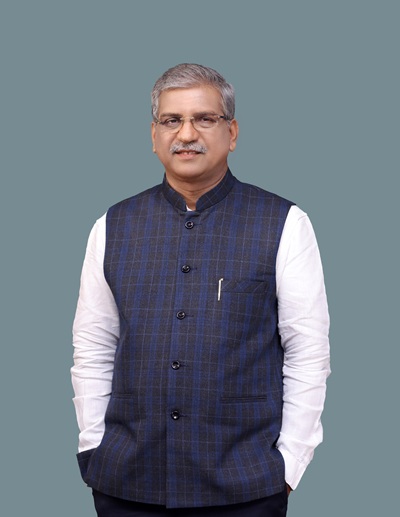
Commenting on the performance, Dr. K. Paul Thomas, Managing Director & CEO, ESAF Small Finance Bank, said: “Q2 FY27 marks an important milestone in ESAF Small Finance Bank’s transformation journey, with record quarterly profitability, strong business growth and improving asset quality. Our strategic focus on building a diversified and increasingly secured portfolio is progressing well, with secured advances now accounting for 64% of our total advances.
The successful implementation of ESAF 2.0 – StratoNeXt, our flagship technology transformation programme, is another landmark achievement, establishing a modern and scalable digital foundation for the Bank’s next phase of growth. I sincerely appreciate the dedication of our employees and the support of our technology partners in making this complex transformation possible.
Going forward, we will continue to strengthen our core MARG portfolio, deepen financial inclusion and advance our phygital strategy by combining our strong branch network with next-generation digital capabilities. Our focus remains on delivering superior customer experiences, strengthening customer trust and achieving sustainable, profitable growth while staying true to our mission of inclusive banking.”




Leave a Reply