
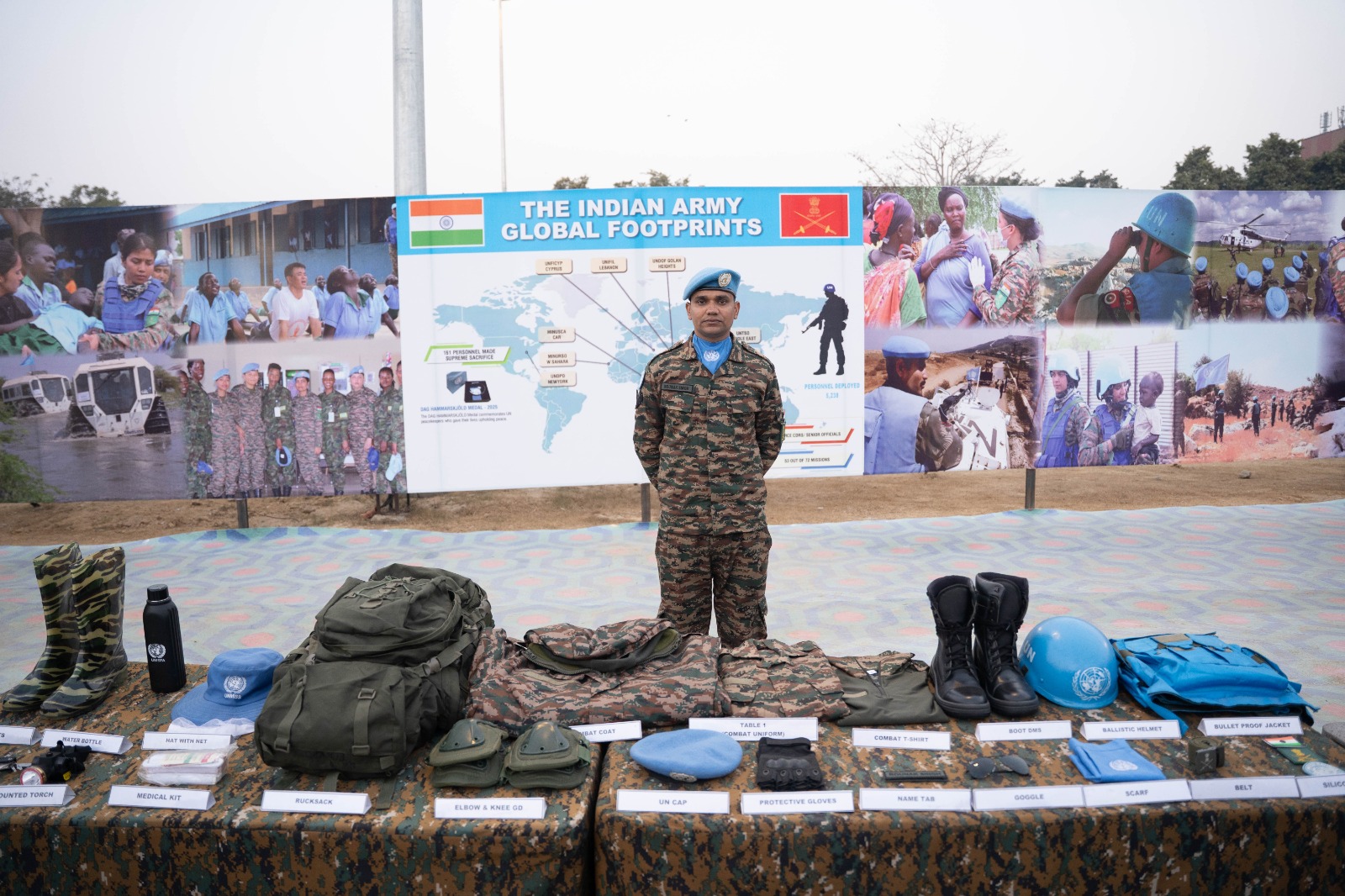
In a Solemn Army Day Tribute, Warriors Revisit 1999 Through Stories and Sacrifice at the New Delhi World Book Fair 2026
New Delhi : In a solemn tribute aligning with the spirit of Army Day, decorated veterans of the Kargil War revisited the valour and sacrifice of 1999 during a special panel discussion at the New Delhi World Book Fair 2026. The nine-day fair, which attracts participation from over one thousand publishers representing more than 35 countries, is dedicated this year to the theme “Indian Military History: Valour and Wisdom @75.” The session powerfully embodied this theme, emphasizing the enduring motto, “A soldier does not die when he is hit by a bullet on the battlefield; he dies when the nation forgets him” and highlighting the timeless legacy of India’s military heroes.
Against this backdrop of curated literary tribute, the panel discussion provided a deeply personal thread to the broader narrative. Moderated by Colonel S C Tyagi, the session featured gripping firsthand accounts from Lieutenant General Mohinder Puri and Brigadier Om Prakash Yadav, whose experiences are preserved in the very books on display.
Lieutenant General Puri transported the audience to the formidable Himalayan frontlines, vividly recalling, “The terrain was our first and most relentless enemy. We were ordered forward from a low valley, facing a climb that doubled our expected march. We moved through those frozen passes not as individuals, but as a single body-each man carrying the weight of his brother, his weapon and the nation’s expectation. Reaching our objective was only half the battle; the real test was holding it under fire and turning intelligence into action in the thin, punishing air.”
He detailed the pivotal moment of the campaign, sharing, “The night we took Tololing was a symphony of silence and sudden storm. We moved in the dark and by the first light, the peak was ours. But the cost of that dawn was the realization that the enemy had watched our every step. Our victory was immediately met with a tempest of shelling, a reminder that in those mountains, every triumph was earned, never given.”
Brigadier Yadav shared a tale of raw human spirit that hushed the room, recounting the grueling advance of his battalion. “We covered 60 kilometers in utter darkness, a column of ghosts navigating by instinct and trust. In that chaos, we were forced to make an impossible choice—to leave one of our own, wounded and unable to go on. For days, we carried the weight of that decision.”
He then revealed the astonishing conclusion, “On the tenth day, near a shallow stream, we saw movement. Expecting an enemy scout, we closed in-only to find our brother. He had survived a week alone, his wounds a map of his suffering, yet in his hands were two rifles, clutched with a purpose that defied his condition. He hadn’t been waiting to be saved; he had been preparing to rejoin the fight.”
Colonel Tyagi added a poignant layer on leadership and legacy, reflecting on a conversation from the war’s aftermath. “I once asked a commander, in the quiet after the storm, if he felt pride in capturing an entire mountain ridge. His reply has stayed with me forever: ‘I am happy, but I am not arrogant. My happiness is shadowed by the faces of the young soldiers who did not return. A commander’s victory is written not in the land taken, but in the lives entrusted to him and the ones he must mourn.’ That is the solemn truth we carry, the honour and the heartbreak are woven into the same cloth.”
The event highlights how the fair’s vast collection, spanning English, Hindi, and other Indian languages and covering subjects from history to heritage serves to immortalize such acts of courage. By weaving these personal testimonies into the nation’s literary fabric, the discussion honoured the Army Day ideal that our heroes live on through the stories we preserve and cherish.


Leave a Reply