
In Mumbai, the value of real estate is increasingly being shaped by the value of time. As the city expands and mobility improves, locations that bring people closer to workplaces, business districts and social infrastructure are likely to command increasing preference. This is where the Coastal Road could prove transformative; not simply by adding another transport corridor, but by fundamentally changing how Mumbai’s western suburb connects with the city’s core.
The first phase of the Coastal Road has already established a high-speed connection between South Mumbai and the Bandra-Worli Sea Link. Its ongoing expansion towards the northern suburbs, including the Versova-Dahisar corridor, is expected to further strengthen connectivity across the western belt.
For Mumbai, the biggest benefit is not kilometres saved, but hours saved. A faster and more direct western corridor can reduce dependence on the Western Express Highway and other congested arterial routes, making travel between South Mumbai, Worli, Bandra and the western suburbs considerably more seamless. This can have a direct bearing on where people choose to live, where businesses choose to operate and where investors see the next opportunity.
The implications are particularly significant for Andheri, Jogeshwari, Goregaon and Borivali. These are no longer simply residential suburbs; they have evolved into substantial employment, commercial and lifestyle destinations in their own right. Their established residential catchments, suburban railway network, metro connectivity, proximity to the airport and expanding social infrastructure provide a strong foundation for further growth.
Andheri is already among Mumbai’s most strategically connected micro-markets, while Jogeshwari benefits from its location between Andheri, Goregaon and the eastern suburbs. Goregaon has emerged as a major residential and commercial hub and Borivali is increasingly benefiting from large-scale infrastructure improvements. Better integration with the Coastal Road can strengthen this entire stretch as a connected urban ecosystem.
This connectivity story also strengthens the investment case for the western suburbs. Real estate appreciation is most sustainable when infrastructure growth converges with established demand. Unlike emerging markets that depend heavily on future development, the western suburbs already have strong end-user demand, employment opportunities, retail, education, healthcare and social infrastructure. New connectivity therefore adds to an existing value proposition rather than creating one from scratch.
For investors, this distinction is critical. The opportunity lies not merely in buying ahead of infrastructure, but in identifying established markets where infrastructure can unlock the next cycle of value creation. Better accessibility can widen residential catchments, improve commercial viability, support rental demand and enhance the long-term attractiveness of these locations.
There is also a broader shift taking place in Mumbai’s real estate equation. Historically, proximity to South Mumbai commanded a significant premium. Going forward, connectivity may increasingly matter more than physical proximity. If infrastructure can compress travel times between the city’s core and western suburbs, the premium could gradually shift towards locations that offer the right combination of accessibility, liveability, amenities and value.
From a developer’s perspective, this is particularly significant. Infrastructure does not create real estate value in isolation; it amplifies the strengths of locations that are already fundamentally sound. The Coastal Road, supported by Mumbai’s expanding metro and road network, can therefore act as a catalyst for the next phase of development across the western suburbs.
Mumbai’s next growth story will not be defined only by how far the city expands, but by how effectively its different districts become connected. The Coastal Road is helping make that possible. By bringing South Mumbai and the western suburbs closer in terms of travel time, it can transform the western corridor from Mumbai’s residential hinterland into one of the principal engines of the city’s next cycle of residential, commercial and investment growth.
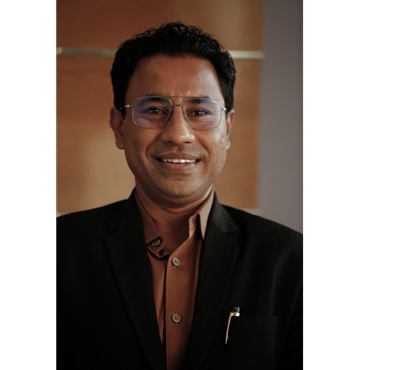
Arshad Lashkaria, CEO & Managing Director, Lashkaria Group


Leave a Reply