
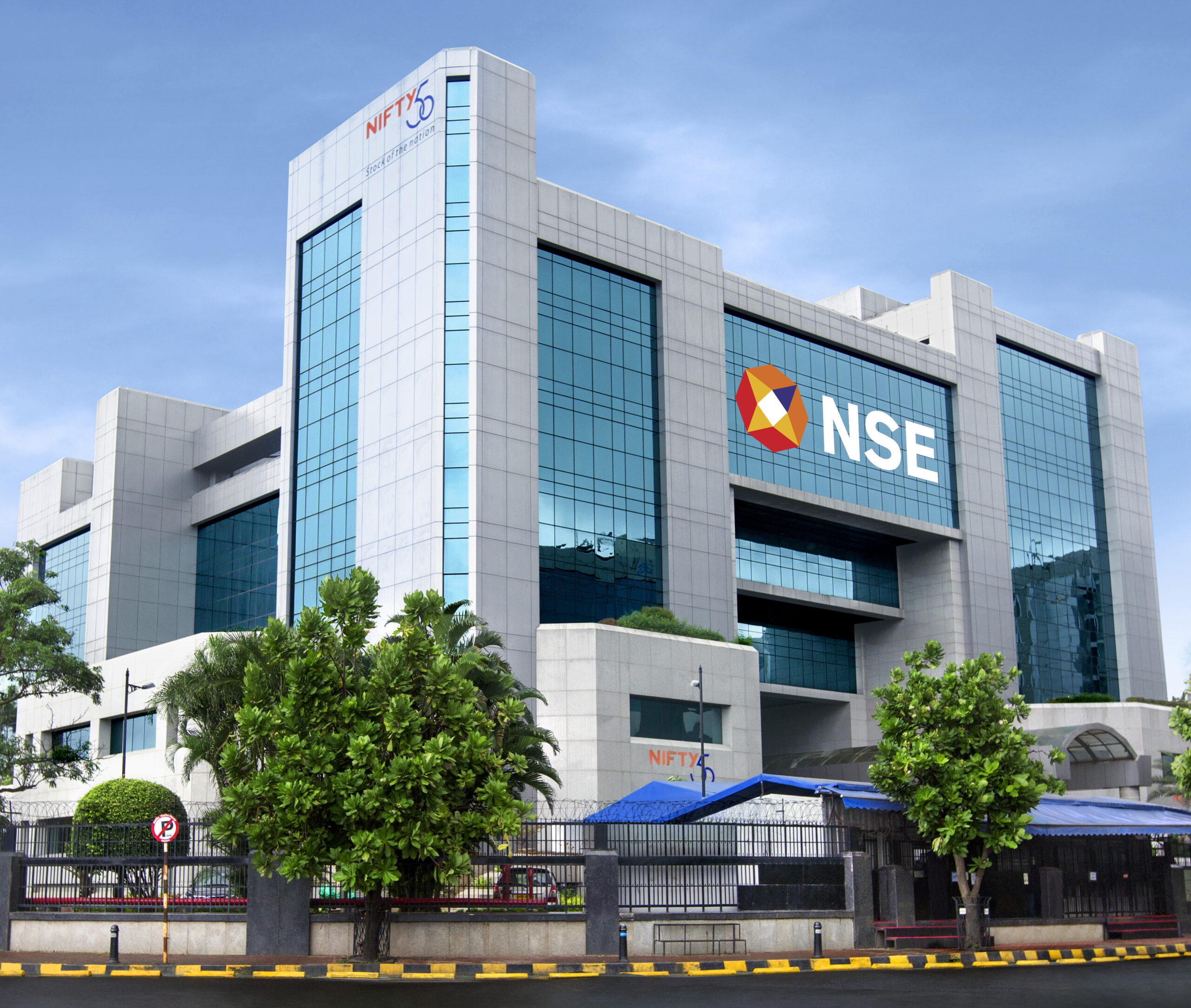
The NSE Market Pulse November 2026 report highlights significant developments across India’s economy and financial markets, spanning the sharp recovery in domestic equities, shifting investor ownership patterns, Q2 FY27 corporate earnings growth, and evolving global macroeconomic conditions. Published by the National Stock Exchange of India (NSE), the monthly edition offers comprehensive insights into the Indian stock market outlook, macroeconomic indicators, and primary and secondary market trends.
A central theme of the November 2026 edition is the growing dominance of domestic investors in Indian equities, with Domestic Institutional Investor (DII) ownership surpassing Foreign Portfolio Investor (FPI) ownership by a record margin, alongside a strong rebound in the Nifty 50 and renewed foreign capital inflows.
India’s Equity Ownership Trends: Domestic Investors Take the Lead
One of the most defining findings of the NSE Market Pulse November 2026 report is the structural shift in the ownership of NSE-listed companies as domestic savings steadily anchor the market.
| Investor Category (NSE-Listed) | Ownership Share (Sep 2026) | Key Milestone / Trend |
| Domestic Institutional Investors (DIIs) | 19.6% | Exceeds FPI share by a record 4.9 percentage points |
| Individual Investors (Direct + Indirect) | 19.5% (Record High) | Household equity holdings reached ~₹90.4 lakh crore |
| Foreign Portfolio Investors (FPIs) | 14.7% | Declined to a 21-year low in September 2026 |
| Domestic Mutual Funds (Subset of DII) | 11.8% (Record High) | Increased for the 13th consecutive quarter |
This sustained shift underscores the growing role of household financialization, systematic investment plans (SIPs), and domestic mutual fund inflows in providing structural stability to Indian equities.
Indian Stock Market Performance: Nifty 50 Stages a Strong Recovery
Indian equities demonstrated strong resilience amid global volatility. After gaining 1.9% in October 2026, the Nifty 50 advanced another 11.9% through November 20, nearly erasing its calendar-year losses. Notably, the November rally broadened beyond large-cap stocks to include mid-cap, small-cap, and micro-cap indices.
Five primary catalysts drove the equity rebound:
- Q2 FY27 Earnings Beat: Stronger-than-expected corporate financial results across key sectors.
- Easing Crude Oil Prices: Brent crude retreated from ~$120/bbl in October to ~$92/bbl by November 20.
- Renewed FPI Inflows: Foreign investors deployed ~US$13 billion in November after net outflows in October.
- Global Portfolio Reallocation: Fresh global capital rotation back into Indian equities.
- Steady Domestic SIP Flows: Consistent retail and mutual fund participation.
India’s Economic Outlook: Growth Momentum and Inflationary Pressures
India’s macroeconomic backdrop reflects resilient domestic growth alongside heightened inflation risks that warrant close policy monitoring:
| Macroeconomic Indicator | Latest Reading | Reference Period / Context |
| Retail Inflation (CPI) | 6.1% | October 2026 (Crossed RBI’s upper tolerance band) |
| Wholesale Inflation (WPI) | 12.3% | October 2026 (Elevated wholesale price pressures) |
| Industrial Production (IIP) | +6.7% YoY | September 2026 (Broad-based industrial activity) |
| Bank Credit Growth | +19.6% YoY | October 2026 (Strong domestic credit expansion) |
| Brent Crude Oil | ~US$92 / barrel | As of Nov 20, 2026 (Down from ~US$120/bbl in Oct) |
In addition, the NSE report flags external sector dynamics, foreign exchange reserves, fiscal discipline, and agricultural upside risks stemming from below-average reservoir storage and subdued rabi crop sowing.
Q2 FY27 Corporate Earnings: Revenue and Profitability Trends
Preliminary Q2 FY27 financial results indicate an improvement in top-line revenue, operating profit, and profit after tax (PAT) growth across Nifty 50 and Nifty 500 constituents.
Earnings momentum was primarily led by three key sectors:
- Energy: Supported by refining and domestic demand trends.
- Materials: Benefiting from volume recovery and operational scale.
- Consumption-Oriented Industries: Backed by resilient urban and festive spending.
However, overall operating margin expansion remained relatively constrained due to year-on-year input cost pressures and wide performance divergence across sectors, keeping earnings sustainability central to market valuations.
Indian IPO Market and Secondary Market Developments
Primary Market & Landmark IPO Activity
India’s primary market maintained strong momentum in October 2026, with Main Board IPO proceeds reaching approximately ₹45,800 crore—of which fresh capital issuance accounted for roughly 81%. The Jio Platforms IPO, valued at ₹30,188 crore, emerged as India’s largest initial public offering to date.
Secondary Market & Derivatives Trends
While average daily cash market turnover moderated, overall retail participation continued to broaden:
- Active Investor Base: Reached a two-year high of 1.44 crore active investors.
- Equity Futures Turnover: Increased 12% month-on-month.
- Options Premium Turnover: Rose 38% month-on-month.
- Average Trade Size: Moderated to ₹26,604, reflecting broad retail participation across primary and secondary segments.
What Does the NSE Market Pulse November 2026 Report Indicate?
The NSE Market Pulse November 2026 report underscores a structural evolution in India’s capital markets. Rising DII (19.6%) and household (19.5%) equity ownership have created a deep domestic liquidity buffer, while the Nifty 50’s 11.9% November rally, US$13 billion in FPI inflows, and improving Q2 FY27 earnings bolster near-term sentiment. Moving forward, CPI inflation above 6%, crude oil trajectories, rabi sowing progress, and corporate margin resilience remain the pivotal variables for investors to watch.
Source: NSE Market Pulse, November 2026, Volume 8, Issue 11.
Disclaimer: This article is for informational purposes only and does not constitute investment advice.





Leave a Reply