
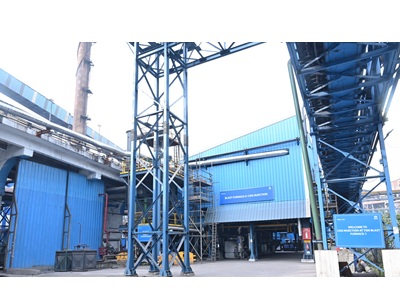
Bengaluru: Tata Steel Meramandali has commissioned a groundbreaking Coke Oven Gas (COG) Injection Project at its Blast Furnace 1—a first-of its kind sustainability initiative in the Indian steel industry. This deployment advances sustainable steelmaking and reinforces Tata Steel’s commitment to achieving its Net Zero carbon emissions target by 2045.
By utilizing byproduct gases within the blast furnace process, the project directly substitutes external fossil fuel reductants, cutting operational carbon dioxide emissions and lowering overall energy costs.
Technical Innovation in LowCarbon Ironmaking
In integrated steel plants, Coke Oven Gas (COG)—a hydrogen and hydrocarbonrich byproduct—is conventionally burned for power generation, plant heating, or flared off.
Developed in partnership with technology provider M/s Paul WurthSMS and equipment supplier M/s Kobelco, Tata Steel’s new system injects COG directly into the blast furnace through tuyeres. This process replaces traditional carbon reductants with recycled, hydrogenrich process gas.
Key Operational Benefits
Fossil Fuel Substitution: Directly replaces external fossil fuel inputs with byproduct gases, reducing environmental impact.
ThreeFuel Operational Flexibility: Operates the blast furnace with a threefuel system, enhancing operational stability and energy efficiency.
Reduced Carbon Footprint: Accelerates lowcarbon ironmaking while curbing overall greenhouse gas emissions.
Executive Commentary on Net Zero Commitments
Leadership at Tata Steel emphasized that adopting advanced injection technologies is critical to decarbonizing heavy manufacturing:
“This initiative of maximising the utilisation of process gases to reduce dependence on external fossil fuels reinforces Tata Steel’s leadership in sustainable manufacturing. We remain focused on demonstrating and scaling low carbon technologies, thereby accelerating our journey towards Net Zero by 2045.”
- Subodh Pandey, Vice President – Technology, R&D, NMB and Graphene, Tata Steel
“This project is a good example of how our teams continuously look for ways to improve efficiency while reducing the environmental impact. By finding a productive use for coke oven gas within the blast furnace process, we are making our operations leaner and cleaner.”
- Sudhir Kumar Mehta, Vice President – Operations, Tata Steel Meramandali
Tata Steel’s Green Steel Transformation
Tata Steel continues to lead the industry in testing and implementing lowcarbon blast furnace technologies, having previously demonstrated coal bed methane, biochar, and hydrogen injection.
Tata Steel Group Profile
| Parameter | Operational Details |
| Crude Steel Capacity | 36 million tonnes per annum (MTPA) |
| Consolidated Revenue | ~US$26 billion (FY ending March 31, 2026) |
| Global Workforce | 77,000+ employees across 5 continents |
| Key Sustainability Goal | Net Zero emissions across operations by 2045 |
| ResponsibleSteel™ Coverage | >90% of Indian production capacity certified (Jamshedpur, Kalinganagar, Meramandali) |
Through ongoing digital transformation and green tech adoption—supported by World Economic Forum Global Lighthouse recognitions across major manufacturing sites—Tata Steel is establishing a scalable model for decarbonized global sustainable steelmaking.



Leave a Reply