
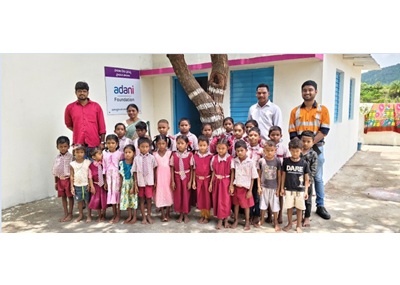
- Ambuja Cements and the Adani Foundation, upgrade infrastructure at a tribal government school in Devapur.
- The intervention addresses critical challenges including waterlogging, unsafe premises and inadequate facilities.
- Improved infrastructure has enhanced school attendance, hygiene and the overall teaching and learning environment for students.
National: Ambuja Cements, the 9th largest building materials solutions provider globally and part of the diversified Adani Portfolio, along with Adani Foundation, is strengthening rural education infrastructure by upgrading MPPS Gatraopally, a government primary school in the tribal village of Devapur, creating a safer and more conducive learning environment for children.
Serving 28 students, the school had long struggled with waterlogging, unsafe open premises and inadequate infrastructure, affecting classroom activities, sanitation and the delivery of mid-day meals. These challenges impacted both student attendance and the overall quality of the learning environment.
To address these issues, Ambuja Cements, along with Adani Foundation, constructed a compound wall, laid concrete flooring across the school premises and built a dedicated kitchen shed. The intervention has eliminated waterlogging, secured the campus against stray animal intrusion and enabled hygienic preparation of mid-day meals, improving both safety and operational efficiency.
Through this intervention, Ambuja Cements, has demonstrated how targeted investments in school infrastructure can improve educational access, strengthen community confidence and create lasting social impact in remote rural and tribal region
The upgraded infrastructure has contributed to improved student attendance and created a more conducive environment for teaching and learning. Teachers are now able to conduct classes without weather-related disruptions, while parents have regained confidence in sending their children to school regularly.
The initiative reflects Ambuja Cements’ and Adani Foundation’s broader commitment to strengthening social infrastructure in communities surrounding their operations. By improving access to safe and inclusive learning spaces, the intervention supports better educational outcomes while contributing to long-term community development.





Leave a Reply