
Mumbai: When travellers visit a new place, they don’t always look for scenic spots. They look for genuine human connections. For years, Meghalaya has offered that warmth, rooted in its rich culture and deep hospitality. Today, that warmth is driving economic growth.
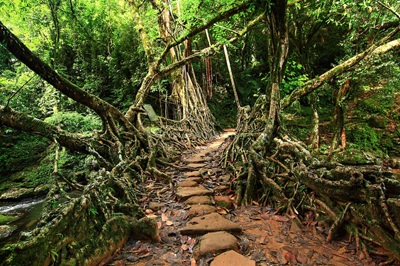
The numbers tell this story clearly. Shillong recently topped Skyscanner’s 2025 Report as the most-searched travel destination in India. It is drawing more visitors than ever under its new tourism identity, Symphony in the Mist. Tourist arrivals have surged from roughly 12 lakhs in 2018 to over 16 lakhs today, and the State has set an ambitious target of 21 lakhs by 2028. In April 2026, NITI Aayog’s Divya Bharat: A Window to the Soul of India report added further weight to this momentum. It identified Meghalaya as one of India’s few year-round travel destinations with no clear off-season. It highlighted the State’s living root bridges, extensive cave systems, and indigenous cultural traditions. The message was clear: Meghalaya is no longer a seasonal stop. It is a destination for all seasons.
But recognition alone does not fill a room. As visitor numbers climbed, a serious challenge emerged. Demand was outpacing supply. Many high-potential destinations lacked adequate lodging, and tourist spending went unrealised. The government saw that building massive hotels was not the only answer. Instead, it chose to empower the families who call these hills home. This thinking made the homestay model the cornerstone of Meghalaya’s tourism strategy.
The government took the first step in September 2023 by launching the Meghalaya Tourism Homestay Scheme in convergence with the Prime Minister’s Employment Generation Programme (PMEGP). The scheme gives financial assistance of up to 70% for projects costing up to ₹10 lakhs. This includes a 35% subsidy under PMEGP and an equal 35% from the State’s Tourism Department, making it accessible to first-time entrepreneurs and rural households. The response was swift. The scheme sanctioned 900 applications. On the ground, more than 490 homestays became operational, creating 1,000 rooms and around 1,500 livelihood opportunities.
With this proof of success, the government moved to scale. It launched the Chief Minister’s Meghalaya Homestay Mission in September 2025, building on the earlier scheme with greater ambition. The Mission targets 3,000 new homestays and 15,000 direct and indirect jobs by 2028. The support structure improved as well. New homestays can receive a subsidy of up to 70%, capped at ₹7 lakhs. Existing homestays can claim an upgradation incentive of up to ₹2 lakhs to improve quality and visitor experience. Early momentum has been strong, with 80 applications already approved across 10 districts, showing participation from every part of the State.
These are not just statistics. For people like Daminot Kharshandi from Ri Bhoi district, a first-generation entrepreneur and scheme beneficiary, this support changed everything. “The Homestay Scheme gave me the financial confidence to launch my business, which I have successfully expanded,” he added. “The State’s Meghalaya Tourism branding policy has also brought more footfalls and revenue.” His story is becoming a familiar one across the region. It shows that the right support, reaching the right people, multiplies.
One such story belongs to Donny Esmond Rapsang. His Friendship Homestay at Umden Umsaitprah, Umroi is a story of resilience and community empowerment. Rapsang once moved between multiple small jobs and businesses to support his family. The Government of Meghalaya’s Homestay Scheme opened a new door. With financial assistance of over ₹9 lakh, he began construction in 2023, completed the homestay in 2024, and opened it to the public in 2025. Today, the homestay supports his household and has created opportunities for local youth involved in its construction and operations. His journey, like Daminot’s, shows how tourism-based initiatives can strengthen livelihoods, promote self-employment, and empower rural communities.
This wide participation reflects what Hon’ble Chief Minister, Shri Conrad K. Sangma has consistently emphasised. These initiatives are not isolated interventions. They build an ecosystem where homestay owners, local transport providers, food vendors, and tourist guides all grow together. The State treats smaller homestays as just as vital as large infrastructure, spreading the economic benefits of tourism to the grassroots rather than concentrating them at the top.
Nowhere is this philosophy more visible than in the State’s plans for the upcoming 39th National Games, 2027. Meghalaya intends to house visitors in homestays rather than traditional Games Villages, placing local families at the centre of a national stage.
As that moment approaches, the homestay revolution tells a bigger story about how Meghalaya is choosing to grow. By giving ordinary people, the tools to succeed, the Government of Meghalaya is doing more than expanding accommodation. It is building something more enduring, a tourism economy where benefits flow directly to the families who have always been its greatest hosts.





Leave a Reply