
Mumbai has always been a city that evolves by adapting to constraints. With limited land, a growing population and rising aspirations for better homes, the next phase of the city’s transformation will increasingly be shaped not simply by new construction, but by reimagining what already exists.
Redevelopment is emerging as one of the defining forces behind this transformation. According to Knight Frank India, Mumbai currently has 1,094 societies under redevelopment, collectively unlocking nearly 432 acres of land. The pipeline has the potential to generate approximately 59,000 new homes worth around ₹1.5 lakh crore by 2031. The momentum is accelerating; around 70 societies in Mumbai had entered redevelopment by mid-March 2026, underscoring the strong momentum in the city’s redevelopment market.
These numbers point to something larger than a real-estate trend. They indicate a fundamental shift in how Mumbai will accommodate its future population.
Redevelopment should be about transforming ageing neighbourhoods, not merely replacing old structures with taller buildings. It presents an opportunity to create safer, more efficient, sustainable and future-ready communities, while preserving the social fabric that gives Mumbai, its neighbourhoods, their identity.
Mumbai’s residential market has remained resilient in 2026. The city recorded 47,355 housing sales in H1 2026, up 1% year-on-year, while new launches rose 8% to 49,161 units, according to Knight Frank India. Unsold inventory declined 4% to 157,410 units, indicating steady absorption. This momentum continued in July, with 13,617 property registrations, an 8.3% YoY increase and the strongest July performance in 14 years.
For developers, this creates both an opportunity and a responsibility. The Mumbai of 2035 will need homes designed around the way people actually live. Residents will increasingly expect thoughtful layouts, natural light and ventilation, wellness spaces, green areas, technology-enabled security and amenities that encourage community interaction. The focus will have to move from simply creating additional floor space to creating better living environments.
Another important evolution is the scale of redevelopment. Larger and cluster-led projects can enable more integrated planning, better utilisation of land and stronger neighbourhood infrastructure. Mumbai’s redevelopment activity is increasingly moving towards larger, more organised projects, with suburban markets accounting for a significant share of this activity.
Sustainability will also become central to this journey. The homes we build today will serve generations of residents. Energy efficiency, water conservation, waste management, green spaces and responsible material choices should therefore be embedded into project planning rather than treated as add-ons.
Technology will similarly redefine the residential experience. From intelligent building management and digital security to energy monitoring and connected infrastructure, technology can make homes more efficient, responsive and convenient. The future-ready home will not necessarily be about having more technology, but about using it intelligently to improve everyday living.
Most importantly, redevelopment must remain resident-centric. Successful urban transformation is ultimately measured not only by the height of a new building or the value of a project, but by whether residents experience a genuine improvement in their quality of life. Trust, transparency, execution and long-term maintenance will therefore be as important as design and construction.
Mumbai’s redevelopment opportunity extends beyond real estate. It is an opportunity to create a more resilient, liveable and aspirational city without losing the neighbourhoods and communities that define its identity.
As we look towards 2035, Mumbai can move from simply accommodating growth to designing its future. The buildings we create today will shape the skyline of tomorrow; but more importantly, they will shape how the next generation experiences life in this extraordinary city.
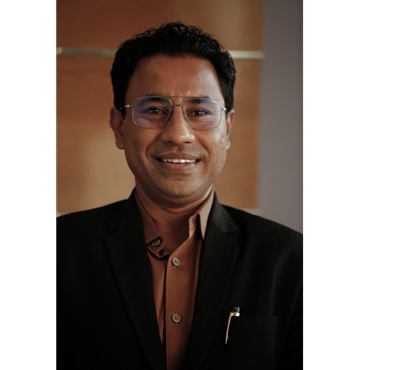
Arshad Lashkaria, CEO & Managing Director, Lashkaria Group



Leave a Reply