
Focus shifting from assembly-led production to indigenous IP, technologies and subsystems; Maharashtra positioned as a leading defence manufacturing hub
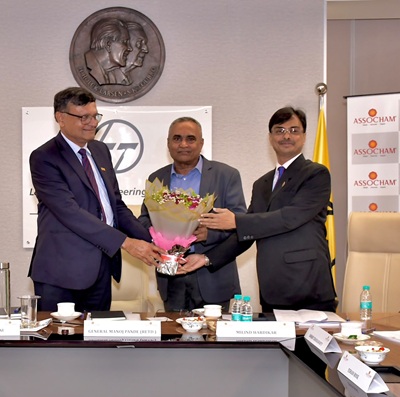
Maharashtra: India’s defence manufacturing priorities are increasingly shifting from assembly-led production towards indigenous technology ownership and innovation, observed General Manoj Pande, PVSM, AVSM, VSM, ADC (Retd.), Former Chief of the Army Staff, while addressing the first stakeholders meeting of the ASSOCHAM Maharashtra Aerospace and Defence Council.
Emphasising the government’s evolving approach, he stated, “The focus is clearly shifting from Make in India to Owned by India,” underscoring the importance of developing indigenous intellectual property, technologies and subsystems to strengthen India’s defence capabilities and strategic self-reliance. He added, “People have realised that it is no longer enough to get a transfer of technology (ToT) from outside and simply assemble things here. You need to have your own IP in technologies and subsystems. I think that is where the government wants to move.”
The Aerospace & Defence Committee Stakeholders Meeting, organised by the ASSOCHAM Maharashtra State Council, brought together eminent industry leaders, defence sector representatives and key stakeholders to deliberate on emerging opportunities and the evolving landscape of India’s aerospace and defence manufacturing sector. The meeting provided a platform for meaningful dialogue, exchange of industry perspectives and strengthened stakeholder engagement, with a focus on fostering collaboration and positioning Maharashtra as a leading destination for defence manufacturing, innovation and technological development.
Addressing the meeting, Mr. Arun T Ramchandrani, Sr VP & Head – L&T Precision Engineering & Systems, and President, SIDM, said, “The scale of the domestic industry today, the output of the industry, is about ₹1,80,000 crore in the last financial year. We are seeing regular growth and a large thrust on self-reliance and domestic product development, so there is huge evolution.”
Speaking at the meeting, Mr. Milind Hardikar, Chairman, ASSOCHAM Maharashtra State Council, said, “Today, this industry sits at the intersection of national security, strategic autonomy, advanced technology, and industrial competitiveness. The future will be shaped not just by manufacturing capacities, but it will be increasingly dependent on ability to design a product, develop, manufacture and continuously upgrade advanced technologies and systems.”
Addressing the meeting virtually, Shri Saurabh Sanyal, Secretary General, ASSOCHAM, said, “Our focus therefore must now be to move beyond import substitution towards indigenous design, technology development, manufacturing, innovation and exports. Maharashtra is particularly well positioned to contribute to this national ambition, given its strong industrial base, engineering capabilities, aerospace and automotive ecosystem, MSMEs, research institutions and skilled workforce.”
At the meeting, Mr. Sanjay Chakraborty, Chairman, Aerospace & Defence, ASSOCHAM Maharashtra State Council; and Vice President & Head – Corporate Center, L&T Precision Engineering and Systems, said, “The strength of an ecosystem lies not merely in the capabilities of its individual constituents, but in how effectively they connect, collaborate and complement one another. Our aim is to build a defence and aerospace ecosystem in Maharashtra that is greater than the sum of its parts.”
The discussion highlighted the growing scope for indigenous manufacturing, technology development and domestic sourcing, while emphasising the need to move beyond conventional production and retrofit-based activities towards greater ownership of technology and intellectual property. Participants also highlighted opportunities in specialised alloys, submarine components, stealth and signature management technologies, aerospace engineering, MRO services, advanced manufacturing and dual-use technologies.
A key area of deliberation was the need to address industry-wide challenges through stronger institutional and policy-level engagement. Participants highlighted the need for greater interaction between industry, the armed forces and government stakeholders to better understand operational requirements, facilitate technology adoption and improve the responsiveness of procurement processes. Concerns were also raised regarding high production costs, limited flexibility in design modifications, delayed payment cycles, working capital constraints and difficulties in accessing institutional finance. The availability and retention of skilled manpower emerged as another important concern, with suggestions to explore structured skilling initiatives and greater industry participation in developing job-ready talent. The need to integrate banking and financial institutions into the council’s engagement framework was also proposed.
The establishment of a dedicated testing and validation facility or sandbox in Maharashtra also emerged as a key proposal during the discussion. Discussions revolved around transitioning from individual industry dialogue towards structured collective action through dedicated working groups, member-led initiatives and clearly defined responsibilities. It was proposed that the council identify priority areas, appoint initiative champions, engage relevant government departments and institutional partners, and develop a member-owned charter with measurable outcomes. The proposed roadmap envisages consolidating priorities over the coming months, finalising the charter and working group structures by March 2027, and commencing implementation from April 2027.
The meeting concluded with a vote of thanks by Ms. Perminder Jeet Kaur, Head – States & Union Territories, ASSOCHAM, who expressed her gratitude to the speakers and participants for their valuable contributions and reiterated ASSOCHAM’s commitment to fostering a collaborative defence and aerospace ecosystem. She highlighted the importance of stronger industry–government engagement, greater interaction with the armed forces and the need to move towards indigenous technology ownership. She also suggested exploring the learnings from IIT Kanpur’s proposed technology sandbox for drones and aerospace to support the development of a similar facility in Maharashtra.





Leave a Reply